
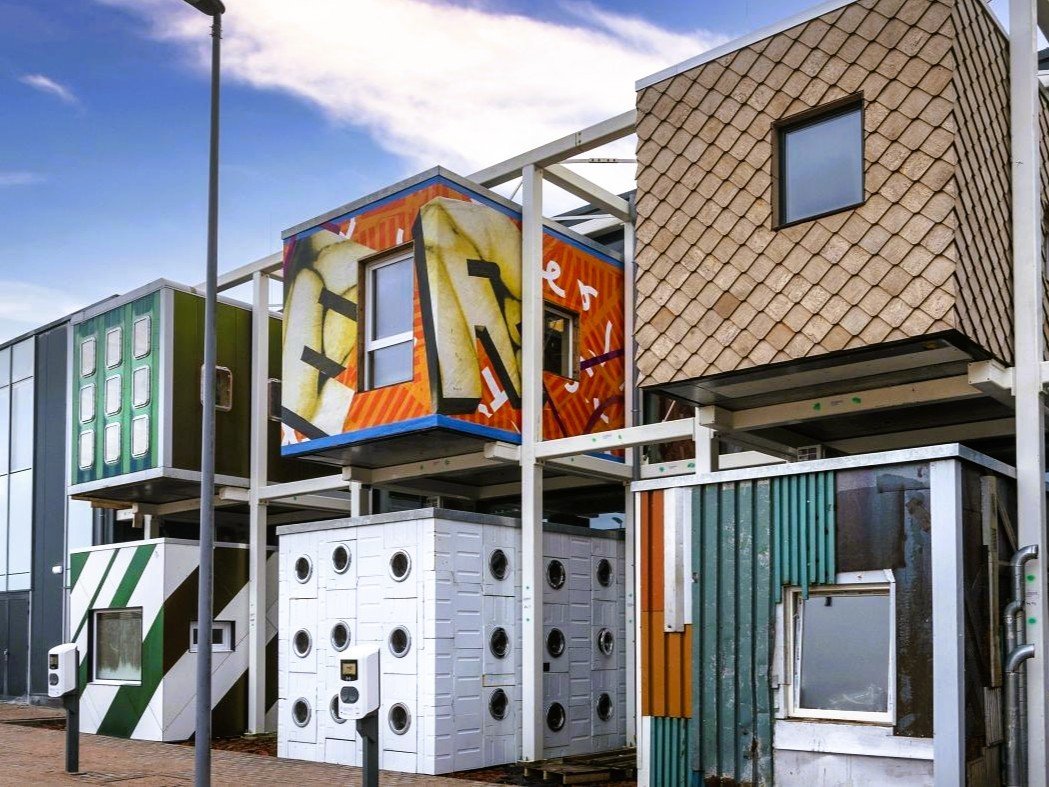
On 7 October 2026, I joined the final FABRIX conference, “Urban Fashion Networks: Systemic Design and Practice”, at De HER in Rotterdam. FABRIX is a Horizon Europe research project that worked with Rotterdam and Athens between 2024 and 2026 to explore more sustainable, locally rooted textile and fashion industries.
The most useful discussion was not about a new recycling technology. It was about bringing making, repair and reuse back into cities—and finding ways to make those activities commercially viable.
1. Looking at circular textiles through the city
Over the past few decades, much of Europe’s textile manufacturing has moved outside the region. Cities still buy and discard clothing, but many no longer have the equipment, skilled workers or businesses needed to process those materials locally.
Collecting used clothes is only the start. Without local sorters, repairers, manufacturers and buyers, collection does not lead to a working circular economy.
FABRIX looked beyond individual technologies to map the businesses, skills and resources already present in a city. Digital tools were developed to make those connections easier to see. But the point is not simply to build a database. It is to help people find each other and start viable businesses.
2. The commercial questions are still there
Entrepreneurs at the afternoon panel spoke openly about the difficulties of turning good ideas into lasting businesses.
Esther Smit of Remake Society discussed products made from used and surplus textiles, alongside vocational training and jobs for people who often struggle to find work. The business gives new value not only to materials, but also to people’s skills.
Koen Meerkerk of Fruitleather Rotterdam spoke about developing a leather alternative from discarded mangoes. It is a different material, but it raises a similar business question: once a material has been developed, who will buy it, and what will they make with it?
Price, quality, supply volumes and design still have to meet what the market needs. Making a product for a pilot and building a profitable business around it are not the same thing.
3. Reuse needs good design—and a different production model
One example was a jacket made from existing garments, including sweaters and trousers that would otherwise have been thrown away. The environmental story matters, but it will not make someone buy a jacket they do not like.
A product still needs the right design, quality and price. Recovered materials also vary in shape, condition and quantity, which makes conventional mass production difficult.
There is room for smaller and more flexible production that works with the materials available. To grow, however, that model still needs reliable sourcing, production capacity and customers.
4. De HER: from waste facility to business hub
We also toured De HER, a reuse, repair and making hub next to a municipal waste drop-off site in Rotterdam. Opened in 2025, it is now home to around 16 entrepreneurs.
Instead of treating everything residents bring in as waste, the site identifies items and materials that can be used again. Wood, furniture and textiles can become inputs for local businesses. Entrepreneurs have space to work, repair products and run educational activities.
Decisions at the point of collection make a difference. If a usable product enters the waste stream, its value may be lost. If it is identified early, it can be repaired, sold again or turned into something else.
De HER is an interesting attempt to turn an existing public facility into a local resource and business hub. It is not a finished business model: supply, material quality, space and the economics of the small businesses still need work.
5. Someone has to connect the pieces
A theme that came up repeatedly was the need for people who can bring different businesses together. One company collects material, another processes it, a third develops products and a fourth knows how to sell them.
Their presence in the same region does not automatically create cooperation. Someone has to identify the opportunity, work through the technical and commercial requirements and help the partners move forward.
This is why FABRIX combines industrial mapping and digital tools with relationship-building. Circular business needs networks of people as much as it needs equipment.
6. Sustainability has to work alongside competitiveness
The closing session looked back at three years of FABRIX and some difficult questions facing European textiles. Bringing production closer to home may create environmental and social benefits, but it does not automatically make businesses competitive.
Supply-chain resilience, economic security and affordability now sit alongside sustainability in policy discussions. These priorities are not always easy to reconcile.
More regulation does not necessarily produce a stronger industry. Companies need markets in which they can continue to earn money, as well as supportive policies.
7. What Japan could take from this
Japan still has regional strengths in weaving, sewing, dyeing, finishing and related manufacturing. Local governments also operate collection centres and other public infrastructure.
What often seems to be missing is the connection between recovered materials and the businesses that could put them to use. Connecting textile offcuts or used clothing with local manufacturers, designers and repairers could create opportunities while helping preserve skills.
But simply passing recovered materials to a company is not a business model. We still need to know who will buy the finished product, at what price, and how consistent demand can be built. It helps to look at the local industrial system, not just individual firms or technologies.
8. My main takeaway
The visit brought together research, entrepreneurs and a real working site. Europe is making progress in mapping local industrial networks and testing new business models, but building stable markets remains difficult.
The question is not only “What can we recycle?” It is also “Who can use the material, who can make the product, and who will buy it?” Those relationships are what make resource circulation economically sustainable.
Through YEJapan and Circular E, I want to keep learning from Europe’s policy and industrial experiments and explore where they can connect with manufacturers, municipalities and local industries in Japan.
Event details
Urban Fashion Networks: Systemic Design and Practice | 7 October 2026 | De HER, Rotterdam, Netherlands | FABRIX (Horizon Europe) | Attended by YEJapan / Circular E.
This article is based on presentations, the site visit and published materials. It includes summaries of speakers’ comments and my own observations.